
Your credit score is one of the biggest levers in how your credit score refinance rate gets set. Here’s how the tiers generally break down, what actually moves the needle if you want to improve yours first, and why it’s worth checking before you assume your options are limited.
Credit score and your refinance rate: the short answer
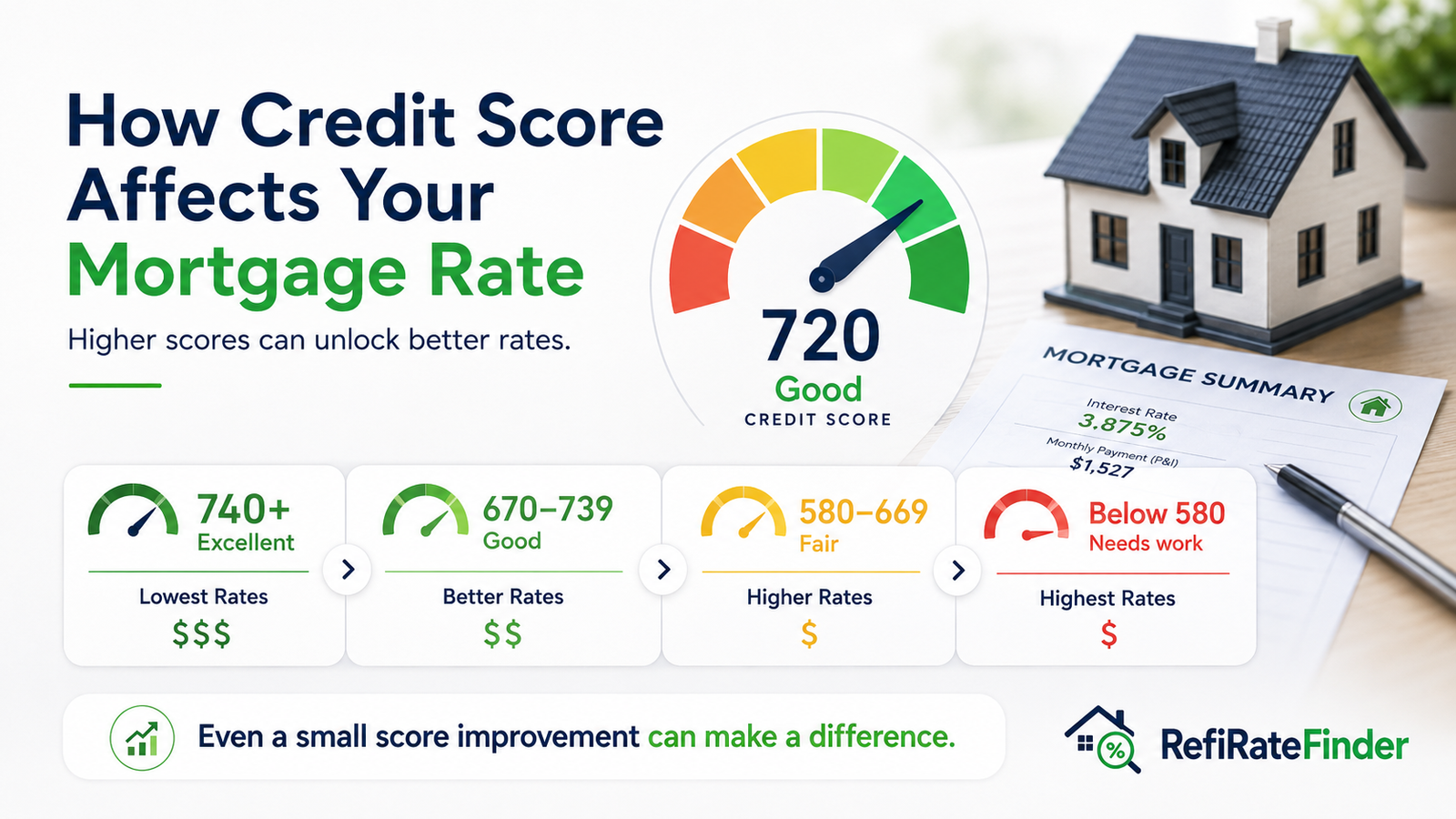
In general, the higher your credit score, the lower the interest rate a lender is likely to offer — because a higher score signals lower risk to them. The exact impact varies by lender and loan type, but the pattern holds across nearly every mortgage product.
How credit tiers typically break down
| Credit range | General tier | What it usually means |
|---|---|---|
| 740+ | Excellent | Access to the most competitive rates a lender offers |
| 670–739 | Good | Solid rates, though not always the very best tier |
| 580–669 | Fair | Higher rates; FHA loans often more accessible here |
| Below 580 | Needs work | Limited conventional options; government-backed loans may still be available |
These ranges are general industry patterns, not guarantees from any specific lender. Actual cutoffs and pricing vary.
Why even a small score jump can matter
Moving from the bottom of one tier to the top of the next — say, from 660 to 675 — can be enough to shift which rate bracket a lender places you in. On a large loan balance over a 30-year term, that kind of shift can add up to meaningful savings, which is why it’s often worth a short delay to improve your score before applying, if you have the flexibility to wait. The exact dollar impact depends on your loan amount and term, but even small rate differences compound significantly over decades of payments.
Practical ways to improve your score before applying
- Pay down revolving balances. Credit utilization (how much of your available credit you’re using) is one of the fastest-moving factors in your score.
- Don’t open new credit accounts right before applying. New inquiries and new accounts can temporarily lower your score.
- Check your credit report for errors. Incorrect late payments or account information can drag your score down unnecessarily — and are disputable.
- Keep old accounts open. Length of credit history matters; closing your oldest card can shorten your average account age.
- Make sure payments are on time, every time. Payment history is typically the single largest factor in most credit scoring models.
Worth knowing: checking your own credit score, or getting matched with lenders through a comparison service like this one, typically uses a “soft” credit check that doesn’t affect your score. A hard inquiry only happens later, when you formally apply with a specific lender.
Credit score isn’t the only factor
Lenders also weigh your debt-to-income ratio, loan-to-value ratio, employment history, and the specific loan type you’re applying for. Two people with identical credit scores can still see different rate offers based on these other factors. The CFPB’s breakdown of rate factors covers this in more depth if you want the full picture beyond credit score alone. Comparing offers on our rates page or directly through the refinance form tends to surface a better sense of your real options than any general chart can, since it reflects your actual profile rather than an average.
See what your credit profile could qualify you for — free, no impact to your score to check.
Check My Rate →This article is for general informational purposes and is not financial or lending advice. Credit tiers described are general industry patterns and not a guarantee of any specific rate or approval. RefiRateFinder is not a lender and does not set interest rates.