
HELOC vs cash-out refinance is one of the most common questions homeowners face when tapping into their home’s built-up equity. Both let you turn your home’s equity into cash. They work very differently once you dig in — here’s how to tell which one actually fits your situation.
HELOC vs cash-out refinance: the core difference
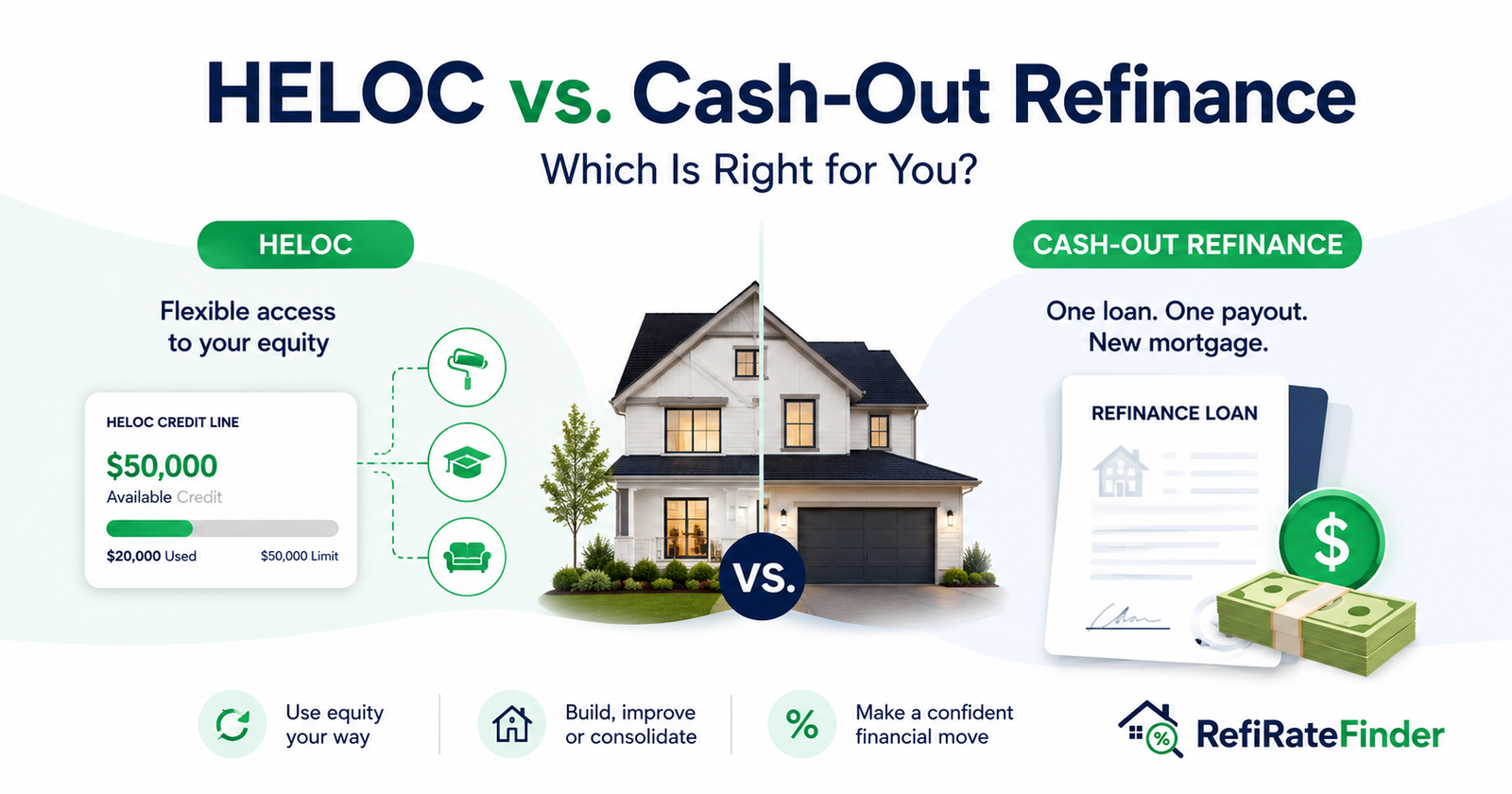
A cash-out refinance replaces your entire existing mortgage with a new, larger loan, and gives you the difference in cash at closing. A HELOC (home equity line of credit) leaves your existing mortgage untouched and adds a separate, revolving line of credit secured by your home. Understanding this distinction upfront makes every other comparison in this article easier to follow.
| Cash-Out Refinance | HELOC | |
|---|---|---|
| Structure | Replaces your mortgage entirely | Separate line of credit, on top of your mortgage |
| How you get funds | Lump sum at closing | Draw as needed, up to your limit |
| Rate type | Usually fixed | Usually variable |
| Affects your first mortgage rate? | Yes — it’s a new loan | No — original mortgage stays as-is |
| Best for | One large, known expense | Ongoing or uncertain expenses |
When a cash-out refinance makes more sense
- Current refinance rates are lower than your existing mortgage rate — you can access cash and potentially lower your rate at the same time
- You want one predictable fixed payment rather than a variable one
- You need a large, specific amount up front (e.g., a major renovation with a fixed budget)
These situations tend to favor simplicity: one loan, one payment, and a rate you can lock in rather than one that moves with the market over time.
When a HELOC makes more sense
- Your current mortgage rate is already low, and refinancing the whole loan would mean giving that up
- You’re not sure exactly how much you’ll need, or need access to funds over time rather than all at once
- You want to only pay interest on what you actually draw, not the full approved amount
A common mistake: assuming a cash-out refinance is always “simpler” because it’s one loan instead of two. If your existing mortgage rate is well below current rates, refinancing the whole balance just to access some cash can end up costing more overall than keeping your mortgage as-is and adding a HELOC. Running the numbers on both structures before deciding is worth the extra few minutes, especially on larger loan balances where the difference compounds over time.
Closing costs, compared
Cash-out refinances typically carry closing costs similar to a standard refinance — roughly 2–6% of the new loan amount. HELOCs often have lower upfront costs, and some lenders waive them entirely, though annual fees or draw fees can apply depending on the provider. It’s worth asking each lender directly for a full breakdown before assuming either option is automatically cheaper.
Bottom line
There’s no universal right answer — it comes down to your current mortgage rate, how much you need, and whether you want a lump sum or ongoing access. The CFPB’s own breakdown of the two products is a good neutral reference if you want another explanation alongside this one. Comparing actual offers on our refinance page or home equity page is the fastest way to see which structure nets out better for your specific numbers, rather than guessing from general rules alone.
Compare cash-out refinance and HELOC offers side by side — free, no obligation.
See My Options →This article is for general informational purposes and is not financial or lending advice. RefiRateFinder is not a lender and does not set interest rates or guarantee loan approval or terms. Borrowing against your home carries risk, including potential foreclosure if you’re unable to repay.