
Knowing when to refinance isn’t a one-size-fits-all decision. It makes sense in some situations and doesn’t in others — here’s how to tell which one you’re in.
When to refinance: the short answer
Refinancing generally makes sense when the savings from a lower rate or better terms outweigh the closing costs of getting a new loan, and you plan to stay in the home long enough to recoup those costs. Beyond that, the right call depends on your specific numbers — not a general rule of thumb.
Signs refinancing could be worth it
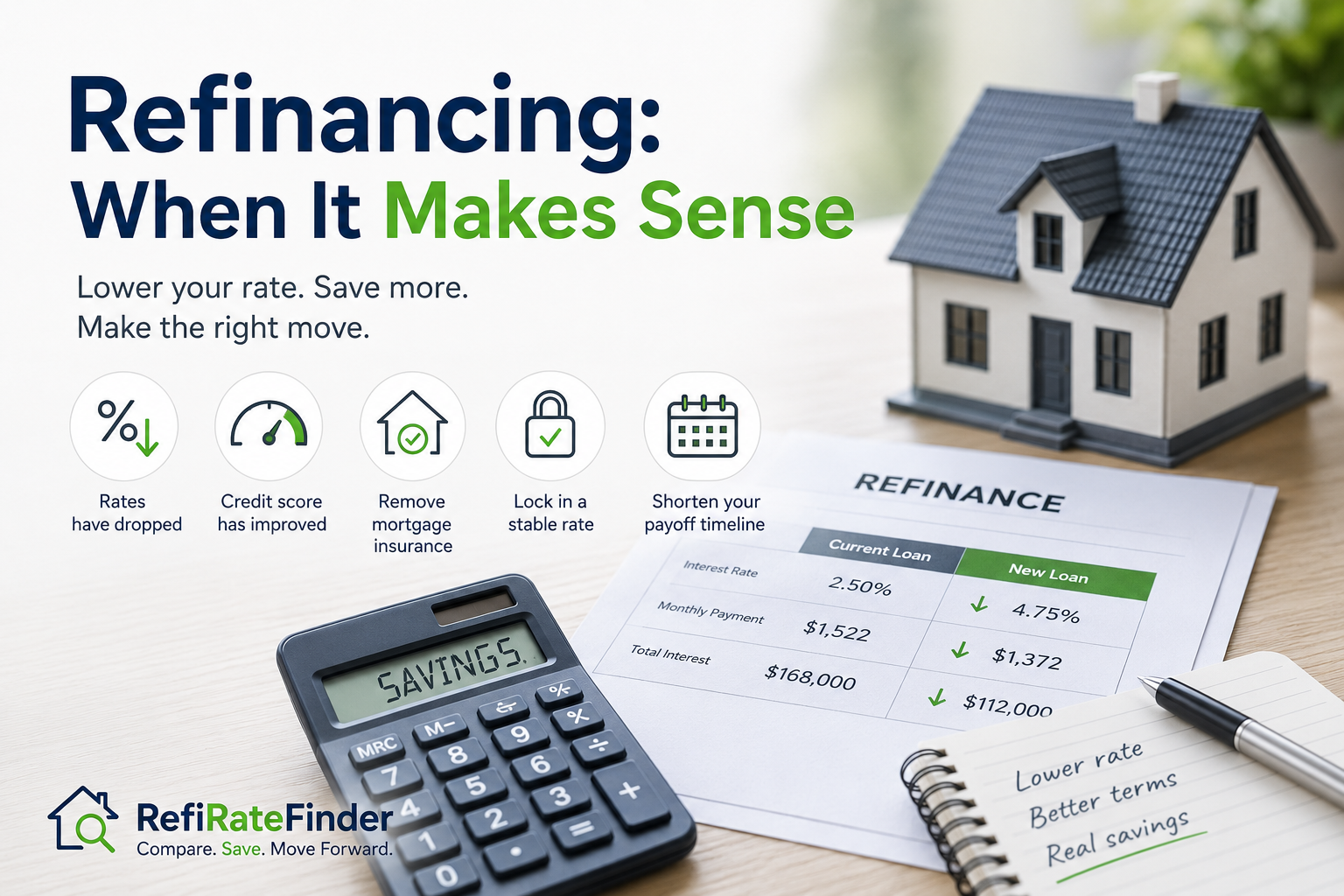
- Rates have dropped since you got your loan. Even a moderate drop can add up to real savings over the life of a 30-year loan.
- Your credit score has improved. If your score has climbed into a better tier since your original mortgage, you may now qualify for a meaningfully better rate.
- You want to drop mortgage insurance. If you’ve built enough equity, refinancing can help you remove PMI on a conventional loan.
- You’re on an adjustable-rate mortgage and want predictability. Refinancing into a fixed rate locks in a stable payment going forward.
- You want to shorten your payoff timeline. Moving from a 30-year to a 15 or 20-year term means paying less interest overall, in exchange for a higher monthly payment.
When it’s probably not worth it
- You’re planning to move or sell within the next couple of years — you may not stay in the home long enough to recoup closing costs
- The rate difference is marginal (well under half a percentage point, as a rough guide) relative to your loan balance
- Your credit has taken a hit since your original loan, which could mean a worse rate than you already have
The break-even math, in plain terms: divide your total closing costs by your monthly savings. That tells you roughly how many months it takes to “break even” on the refinance. If you plan to stay in the home longer than that, it likely pencils out.
What refinancing actually costs
Closing costs for a refinance typically run 2–6% of the loan amount, covering things like the appraisal, origination fee, and title work. Some lenders offer “no-closing-cost” refinances, which usually means the costs are rolled into the loan balance or offset with a slightly higher rate — worth watching for either way, since it changes your real savings math.
A quick example
Say refinancing would save you $150 a month, and closing costs come to $4,500. That’s a 30-month break-even point. If you’re confident you’ll be in the home past that point, the math likely favors refinancing. If you might sell in a year, it probably doesn’t.
The only way to know for sure
General guidelines are useful for narrowing things down, but the actual answer depends on your current rate, your credit profile, your home’s value, and what lenders are currently offering — which varies by borrower and changes daily. The CFPB’s own worksheet on deciding whether to refinance walks through the same tradeoffs from a neutral, third-party angle, if you want a second framework alongside this one. Either way, the only reliable way to know if refinancing makes sense for you specifically is to see real offers side by side rather than relying on averages or rules of thumb that don’t reflect your actual numbers.
See what refinancing could actually save you — free, no obligation, takes about a minute.
Check My Rate →This article is for general informational purposes and is not financial or lending advice. RefiRateFinder is not a lender and does not set interest rates or guarantee loan approval or terms.